
Full-Facial Rejuvenation That Looks Effortless
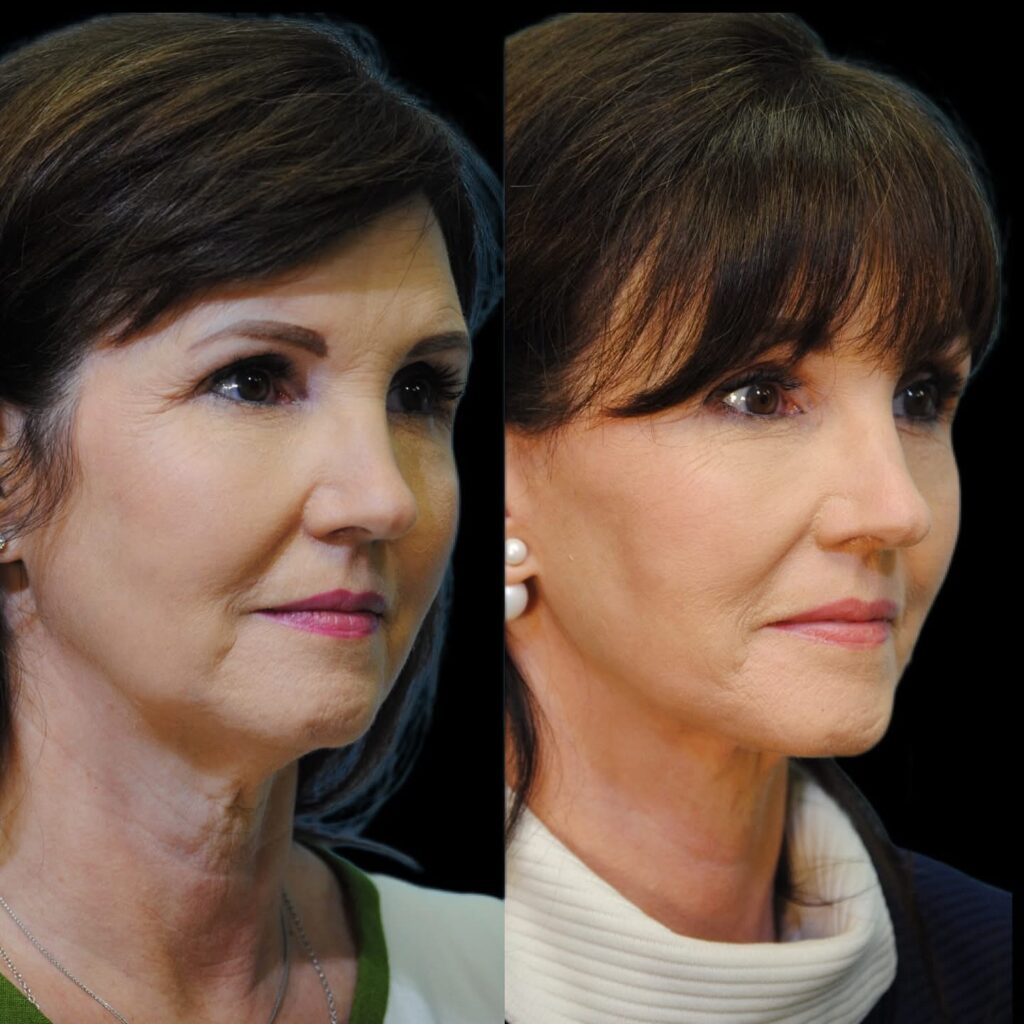
A facelift isn’t supposed to completely alter your appearance, but masterful restore your natural youthfulness. Over time, gravity, tissue laxity, and the loss of deep facial volume can cause the jawline to soften into jowls and the midface to migrate downward, masking the vibrant spirit underneath. Our customized facelift addresses these changes at their structural foundation. Rather than just pulling the skin tight, we artfully lift and secure the deep muscular layers of the face to restore contours. Drawing on our intricate knowledge of head and neck anatomy, we can erase years of aging to reveal a naturally refreshed, remarkably defined silhouette that makes the patient look as young as they feel.
Quick Facts
The Procedure
To deliver a result that looks natural, we perform deep-plane or SMAS (Superficial Muscular Aponeurotic System) facelift that targets the structural muscle and connective tissue layers beneath the skin. The procedure begins with discreet incisions that trace the natural contours around your ear. We position the incisions along the temple hairline, wrap them gently around the front of the ear canal to hide it in the natural shadows, and sweep it around the earlobe to the crease behind the ear. This placement makes the resulting scars are virtually invisible, even with your hair worn up or styled short.
Once the incisions are made, we gently lift the skin to access the underlying SMAS layer. Dr. Joseph then physically repositions and lifts this deeper muscle matrix upward and back to its original, youthful position. The deep muscle structure is then securely anchored in its new, elevated position, the overlying skin is trimmed and draped carefully over the restored contours. For patients requiring a more defined neck and jawline, a hiddenincision is made under the chin. Here, we can access the platysma muscle bands to restore a crisp, elegant angle to the neck.
Recovery
For the first few days following the procedure, patients need to wear a supportive cotton wrap to cradle your new contours and minimize swelling, which typically peaks within the first 72 hours. While a feeling of mild tightness, numbness, and light bruising around the jawline and neck is completely normal, any discomfort is managed with prescribed or over-the-counter pain relievers. Within a week, we’ll remove your sutures, and by the second week, the vast majority of swelling will have subsided. Most patients resume light daily activities by days 10-14.
What to Expect on
Your First Visit
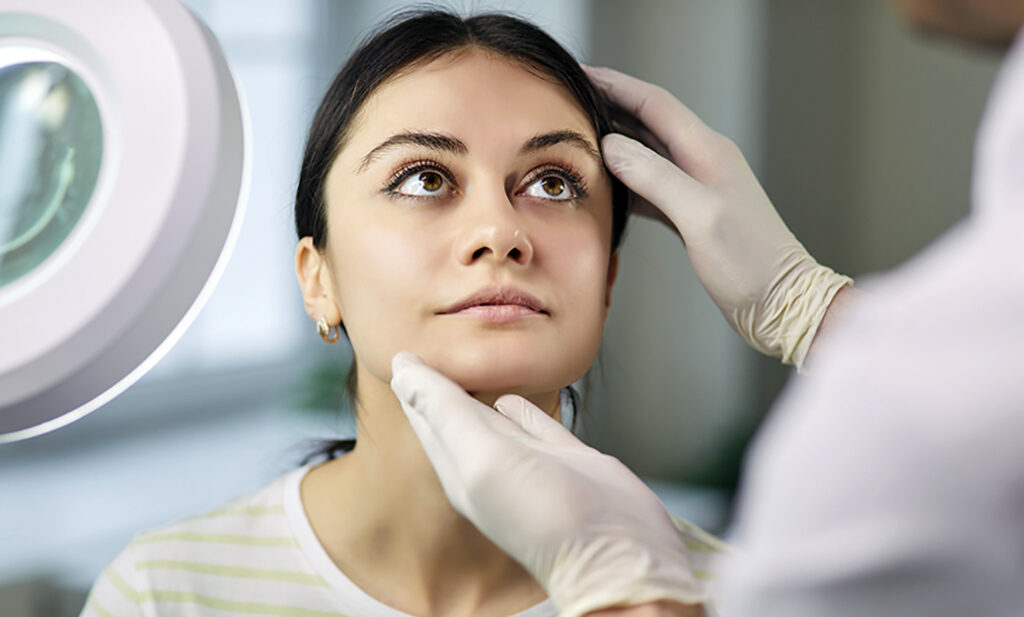
Your initial consultation is a collaborative meeting to map out the natural architecture of your lower face and neck. Together, we’ll study the subtle interplay between your bone structure, muscle laxity, and personal expressions, evaluating exactly how gravity has shifted your midface, softened your jawline, and affected your neck over time. With dynamic facial movement mapping and honest, one-on-one dialogue, we’ll design a surgical timeline to quietly reset the clock. If you have any questions or concerns about the facelift procedure, we’ll provide you with all the information you need to make the most informed decision.
Frequently Asked Questions
There is no “perfect” age for a facelift. Everyone ages at a different rate due to genetics, lifestyle, and skin quality. Most patients who choose to have a facelift are in their late 40s to 60s, often before deep tissue laxity, jowling, and neck sagging become more pronounced. Rather than looking at the calendar, we look at your anatomy. If you’re starting to feel that non-surgical treatments are no longer giving you the results you want, you may be a candidate for a facelift.
A standard facelift is designed to lift and rejuvenate the lower two-thirds of the face—specifically the cheeks, jawline, jowls, and neck. It doesn’t lift the brows or smooth out crows’ feet. However, many patients choose to pair their facelift with an upper or lower blepharoplasty (eyelid lift) or a brow lift during the same surgery to achieve dramatic, complete rejuvenation. Unfortunately, only neurotoxins such as Botox treat the crow’s feet.
While a facelift can’t stop the natural aging process, it resets the clock. You can generally expect the results of a deep-plane or SMAS facelift to last between 10 to 15 years. Even as your face continues to age naturally, you will always look years younger and more refreshed than you would have without the procedure. Protecting your skin from the sun and maintaining a healthy lifestyle will help preserve your results.
The unnatural, “pulled” look associated with older facelifts happens when a surgeon relies solely on pulling the outer skin to lift the face. Because we perform a deeper SMAS or deep-plane lift, we lift and secure the muscle and connective tissue layers underneath first. Once this deep structural foundation is securely anchored, the skin is gently and naturally draped over it without any tension, so your expressions remain soft, natural, and uniquely yours.
Incisions are planned to follow the natural, shadowed contours of your ears and hairline so they are practically invisible once healed. The path typically starts in the temple hair, runs closely along the front curve of the ear, wraps around the earlobe, and finishes in the crease behind the ear. If we are performing neck work, an incision is needed just behind the natural crease under the chin.
Most patients feel comfortable returning to work and normal, light social activities within 10 to 14 days, once the swelling and bruising have significantly subsided and the fine sutures are removed. However, you’ll need to hold off on exercise, weight lifting, or high-impact activities for about 3 to 4 weeks to prevent elevated blood pressure, which can increase swelling or affect your healing incisions.