Opening Your Eyes To A More Refreshed Version Of You
Your eyes are the true focal point of your face, conveying your emotions, energy, and connection to the world long before you ever speak a word. Over time, gravity and the natural breakdown of structural support can cause your eyelids to droop, creating a tired, heavy, or shadowed appearance. A customized blepharoplasty, or eyelid surgery, is a solution to refresh and open the eyes by removing excess skin, tightening delicate muscles, and artfully repositioning displaced fat. Drawing on our deep understanding of facial anatomy and natural symmetry, we deliver a refreshed, wide-awake gaze that looks beautifully rested, entirely natural, and effortlessly bright.
Quick Facts
The Procedure
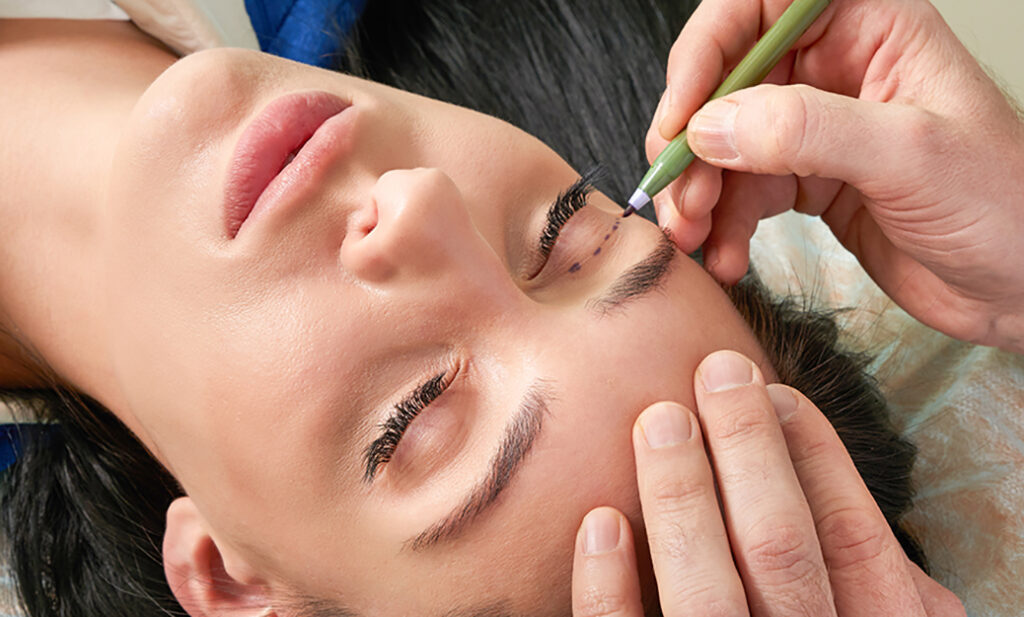
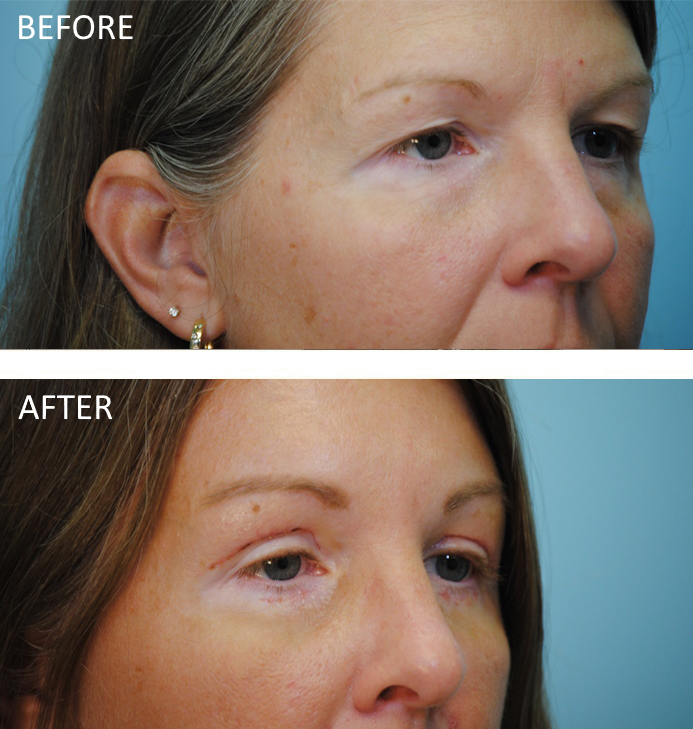
An upper blepharoplasty focuses on restoring a crisp, defined contour to the upper eyelid crease, lifting the heavy “hood” of skin that can drape over the lashes and obstruct your field of vision. The procedure begins with an incision within the eyelid’s horizontal fold. Working through this discreet opening, Dr. Joseph removes the excess tissue. If aging has caused the delicate fat pads in the inner corner of the upper eye to herniate or bulge, we’ll trim or reposition them. The incision is closed with ultra-fine sutures that align the incision edges with microscopic precision, so the healed scar is completely concealed.
The lower eyelids require a more in-depth strategy to smooth out under-eye bags, shadows, and hollows. For patients with puffiness but minimal excess skin, we can perform what’s called a transconjunctival blepharoplasty. This advanced technique involves making an incision on the inside of the lower eyelid, leaving zero external scars. Here, Dr. Joseph can access the fat pockets beneath the eye. Dr. Joseph artfully removes only the necessary amount or reposition it into the correct area. This fills in the dark hollows and creates a seamless, youthful transition from the lower eyelid to the upper cheek. Fat transfer is sometimes needed to build in this region as well, as the cheek begins to lose volume with age.
Recovery
For the first few days after eyelid surgery, patients need to rest with their head elevated. Apply cool compresses for the first few days to minimize swelling and bruising, which tend to peak within the first seventy-two hours. While patients may experience temporary tightness, increased tear production, or slight blurriness from the protective lubricating ointment, these issues quickly fade. Most patients can return to work, social activities, and their normal daily routines within seven to ten days. Once the sutures are removed, any remaining bruising can be easily covered with makeup.
With both upper and lower procedures, our ultimate goal is never to over-correct but to respect your unique eye shape and preserve the natural, expressive movement of your face. Once the structural work is complete, we close any external incisions with five sutures, leaving the eyes looking rested, refreshed, and beautifully balanced.
What to Expect on
Your First Visit
For your initial consultation, we’ll map our your eyes’ unique anatomy and observe your natural expression. During the evaluation, we evaluate the precise relationship between your brow position, upper lid skin laxity, and any under-eye shadows or puffiness. Using gentle, real-time mirror assessments and dynamic facial movement analysis, we’ll decide whether a brow, an upper lift, lower rejuvenation, or a combination approach will best restore your bright, rested gaze. You’ll leave this session with a full blueprint and absolute clarity on how we can illuminate your eyes while preserving their unique, expressive character.
Frequently Asked Questions
The main objective of an eyelid lift is to make you look rested and refreshed, not like a different person. We only remove the heavy, redundant tissue and fat that obscure your natural features. By preserving your unique eye shape and respecting your natural facial anatomy, the procedure simply restores the bright, open gaze you had years ago.
The difference comes down to whether the surgery is performed for appearance or for your vision. A cosmetic blepharoplasty is done to refresh your appearance, smoothing out under-eye bags or removing mild hooding. A functional blepharoplasty is medically necessary because severe sagging of the upper eyelid skin can physically block your peripheral or upper field of vision. When hooding compromises your sight, health insurance may sometimes cover the corrective procedure. Often, visual issues occur when a lid droop (ptosis) is present, which can be corrected as well.
Eyelid skin is among the thinnest on the body, which allows it to heal incredibly well with minimal scarring. For an upper blepharoplasty, the incision is placed precisely within your natural eyelid crease, making it nearly completely invisible when your eyes are open. For a lower blepharoplasty, the incision is either completely hidden inside the eyelid (transconjunctival approach) leaving no external scar, or placed just a millimeter below your lower lash line (subciliary approach), where it blends seamlessly with your natural lash shadows.
While individual healing times vary, most swelling and bruising peak within the first 3 days after the procedure. Utilizing cold compresses and keeping your head elevated will speed up this process. By day 7 to 10, the majority of the visible bruising will have faded to a light yellow hue that is easily covered with makeup, allowing most patients to confidently return to their regular activities.
Blepharoplasty has proven to be a well tolerated outpatient procedure. When performing an upper blepharoplasty alone, we often use local anesthesia with a light oral sedative, meaning you are awake but completely relaxed and numb. If we are performing both upper and lower eyelids, or combining the lift with other procedures, we typically use deep intravenous sedation or general anesthesia so you can sleep comfortably throughout. Post-operative discomfort is usually described as a mild, dull tightness and can be easily managed with over-the-counter or mild prescription pain relievers.
To protect your delicate, healing incisions and avoid stretching the eyelids, don’t wear contact lenses for at least 10-14 days after surgery. You’ll want to wear your glasses during this brief period. Eye makeup, mascara, and facial creams must also be avoided for at least 7-10 days to prevent any irritation or infection.
An upper blepharoplasty typically keeps the eyes looking refreshed, bright, and open for 10 to 15 years, and for many patients the results last a lifetime. Because the genetic fat pads under the eyes are physically repositioned or removed during a lower blepharoplasty, under-eye bags rarely return, making the results of a lower eyelid lift exceptionally long-lasting. While the procedure essentially resets the clock, your skin will continue to age naturally; maintaining diligent sun protection and a medical-grade skincare routine will help preserve your results.